
Winter Car Care Tips for Ontario Drivers, Season by Season
The main winter risk is road salt, on the paint and in the carpets, and this guide shows what to do before, during and after winter.
It then covers spring, summer and fall, so you can look after the car all year in Ontario.
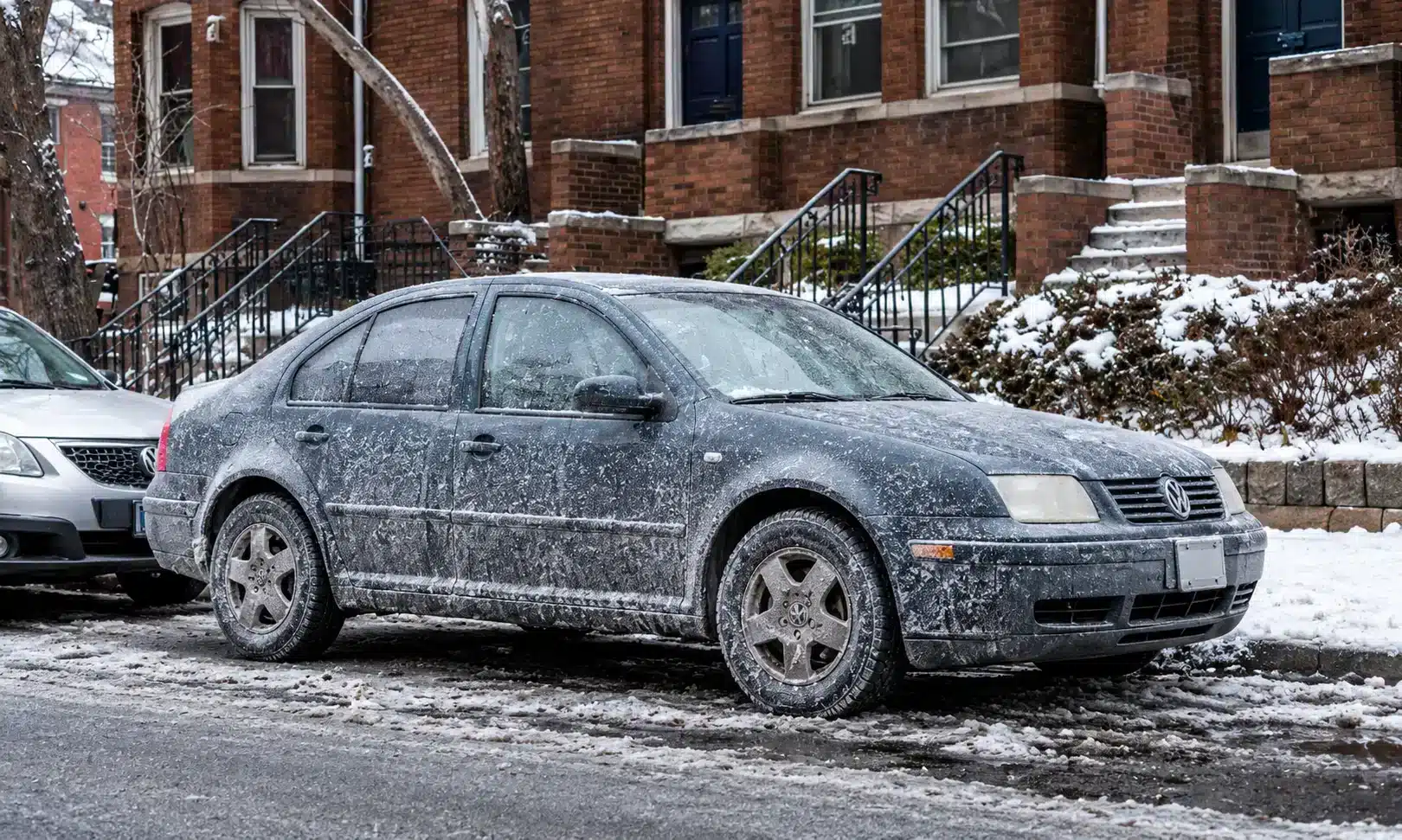
Winter: Road Salt, Paint and Carpets
In winter, road salt is the thing to manage, because it keeps the road safe and does harm to the car. Dilawri, a Canadian car dealer, calls salt a lifesaver for traction and a nightmare for a car's finish.
Wash the salt off regularly. Certified AutoBrokers says a winter car needs a wash more than in any other season, and advises washing after a snowfall, with attention to the wheels, wheel wells and underside.
How Do You Handle Winter Salt Removal and a Car Wash?
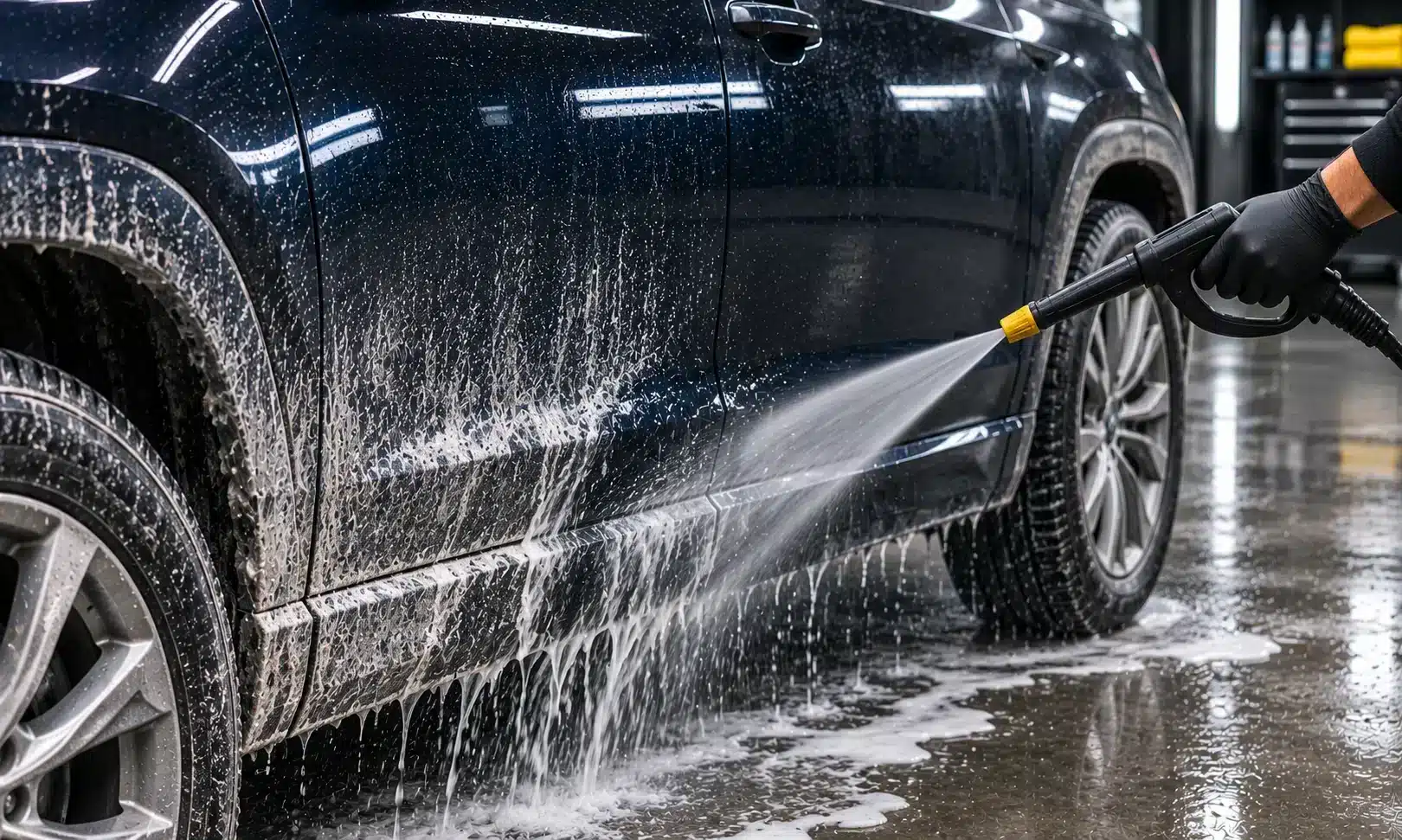
For winter salt removal, a car wash that rinses the lower panels and wheel wells is the simplest tool, and a gentle one is kinder to the paint. The car wash vs car detailing guide compares the kinds.
Do not leave it until spring if you can help it. Lower panels and wheel wells are where salt collects, and they are the parts a quick drive-through often misses.
What Happens to Carpets and Mats in Winter?
Salt tracked in on boots can dry into white marks on carpets and mats. Shake out and vacuum the mats often, and remove the stains early, because they are harder to lift once they set.
EvaFresh Auto Spa takes on salt stain jobs, and its interior detailing removes salt and stains with steam and shampoo extraction.
Does EvaFresh Offer Rust Proofing or an Undercarriage Wash?
No, EvaFresh Auto Spa does not offer rust proofing, undercoating or an undercarriage service. CAA lists frequent washes with an undercarriage spray, and rustproofing, among the ways to avoid rust, so ask a shop that offers them.
What Does Road Salt Do to a Car?
Road salt harms a car by sitting on the paint, in the wheel wells and on the underside, where it can lead to rust if it is left. Certified AutoBrokers says salt that builds up in the wheel wells and undercarriage can form a grimy layer that leads to rust.
Ceramic Pro lists salt among the chemicals, with acids from bird droppings, that a protective coating helps the paint resist. The point is not that salt ruins a car in a week, but that leaving it on for a season costs the finish.
We give no salt statistics here, because none of the sources we read gives a figure we could check.
How Do You Wash a Car in Winter?
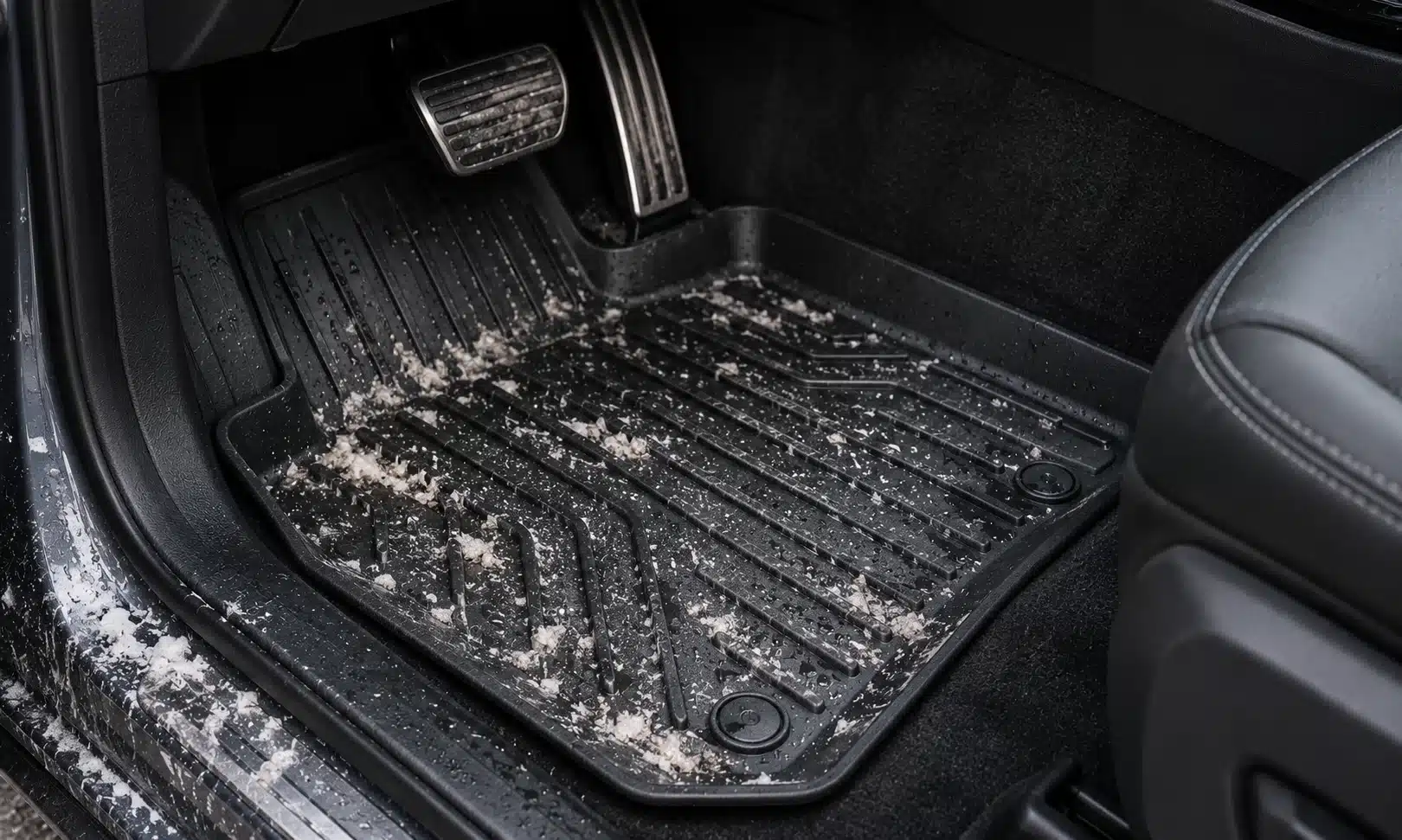
To wash a car in winter, rinse the salt off first, wash gently, and dry it with clean microfiber.
CHD17 Customs suggests all-weather mats in winter, because they catch the salt and wipe clean. It also suggests rinsing before anything touches the paint, which matters most when the paint is gritty with salt.
Before Winter: Wax, Sealant or Coating?
Before winter, put a protective layer on the paint, because it stands between the salt and the clear coat. CAA recommends applying a layer of polymer or carnauba over the paint and trim, and Dilawri says a coat of wax can protect the paint from winter's harsh elements.
The choice is mainly about how long it lasts. Chemical Guys says a wax lasts up to about 3 months and a ceramic coating 2 to 5 years or more, and a sealant, a synthetic wax, lasts longer than a wax.
Whichever you choose, apply it to clean paint, wheel wells included. A layer put on over salt or sap only seals the problem in, so wash first and, if the paint feels rough, decontaminate it.
When Does a Wax or Sealant Make Sense?
A wax or a sealant makes sense when the car is a few years old, you want a low-cost layer, and you are happy to repeat it each autumn. Both are easy to apply at home.
When Does a Ceramic Coating Make Sense Before Winter?

A ceramic coating makes sense for a car you will keep, and Ceramic Pro lists salt among the chemicals a coating protects against. A coating is applied indoors and quoted after an inspection, so book it before the cold arrives. Read the ceramic coating guide or see the ceramic coating service.
Spring: A Car Cleaning Checklist
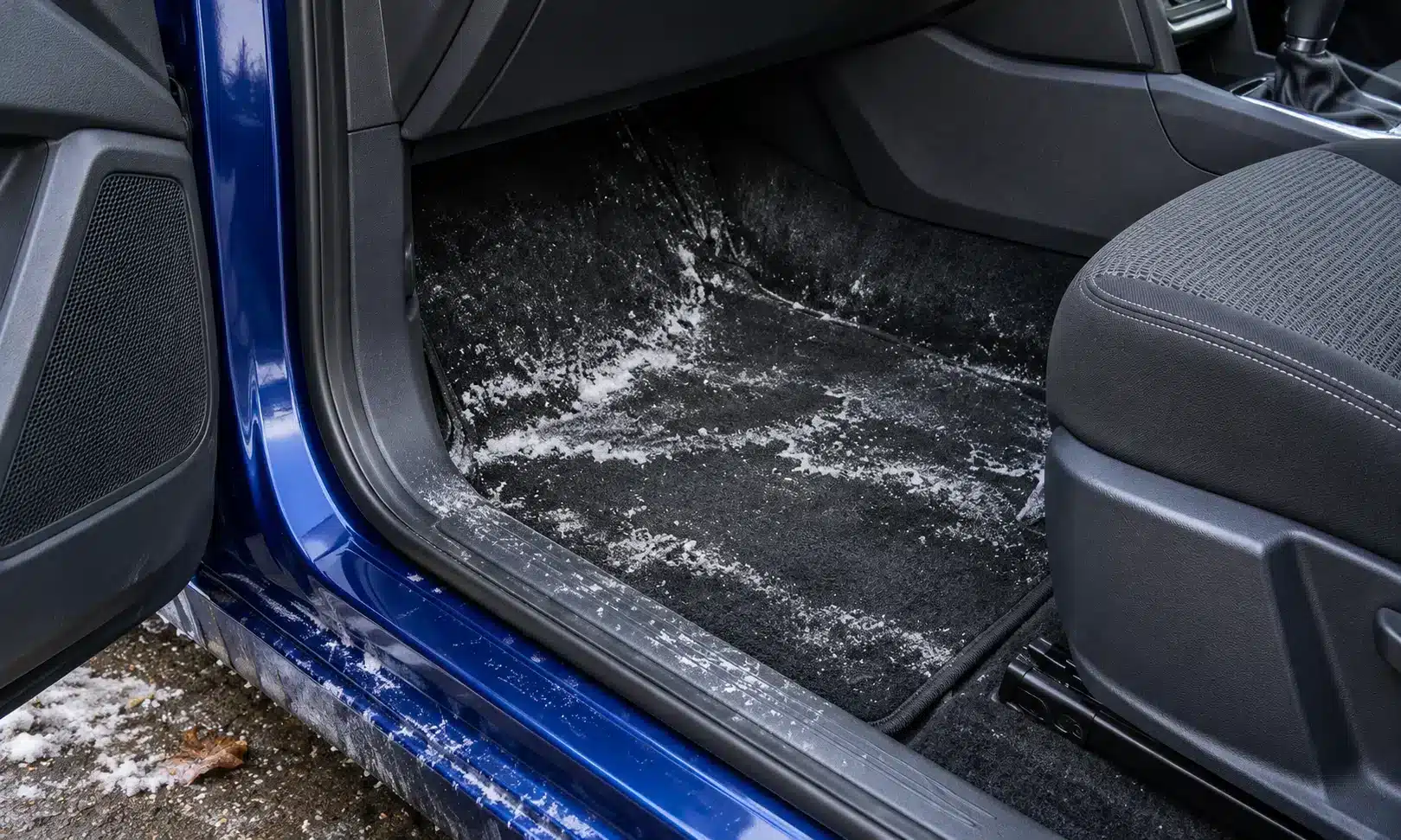
In spring, give the car one thorough clean to take out the salt and see what winter left. This spring car cleaning checklist works for most vehicles.
Take the list in order, with the salt out of the carpets first and the paint last. The paint needs a clean surface before it is protected. For winter salt removal in spring, wash the wheel wells and the underside of the lower panels too, so the salt cannot spread. Protect the paint last, once it is clean and dry.
Do the carpets and seats first, because the inside is where salt stains sit longest. Then do the outside, so that dust from the cabin does not settle on clean paint.
Salt in the carpets is the part most people cannot finish alone. A detailer's interior service uses steam and extraction to lift it out of the fibres.
Summer and Fall Care: Sun, Sap and Storage
In summer and fall the risks change to sun, sap and bugs, and the answer is quick cleaning and a protective layer. Ceramic Pro says UV light can fade and oxidise paint, and that a coating helps resist tree sap and bug splatter.
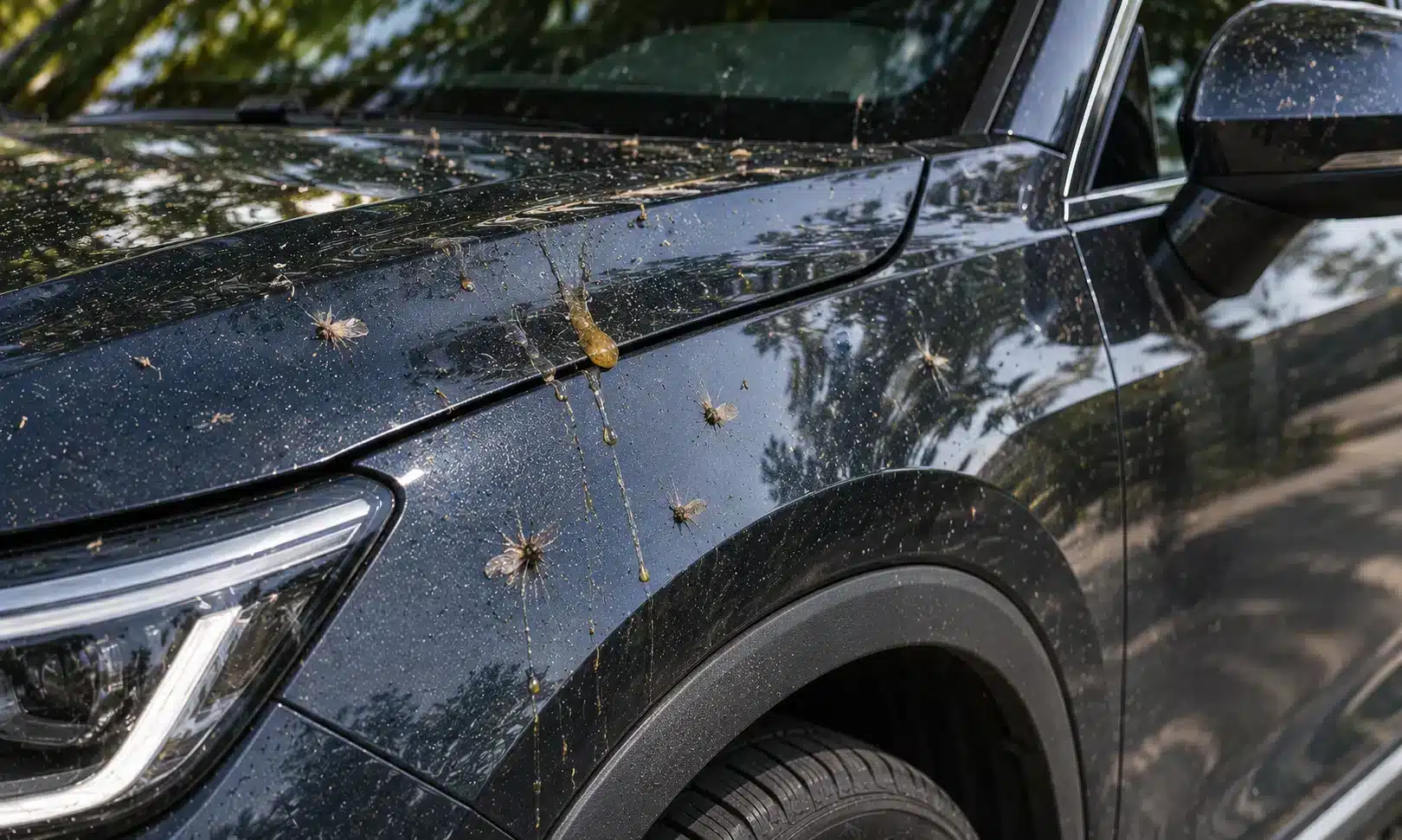
Autumn is also the moment to renew the layer you put on last year, before the first salt is spread. A wax lasts weeks to months, so a layer put on in spring will not last until the roads are salted.
If you store the car for a long period, a clean and dry car is easier to wake up in spring. Fall is also the quiet time of year to book protection before the first snowfall, since waiting leaves little time before the roads are salted.
Which Service Fits Which Season?
The season sets the service: protection before winter, a clean-out after it, and a refresh in summer. The table matches each season to its main task and the EvaFresh service that fits.
Prices for each are on the packages and prices page, and paint work is quoted after an inspection.
How Often Should You Detail Through the Year?
How often to detail through the year depends on how the car is used, and for most Ontario drivers the useful moments are autumn and spring. The general advice is in the guide to what car detailing is.
As a general rule, protect the paint in autumn, wash often through the winter and give the car a thorough clean in spring. Salt in the carpets is a job EvaFresh Auto Spa takes on after winter, and a spring detail deals with it.
Next Steps After This Guide
You do not need to do everything in this guide. Pick the season you are in, do the first item, and book help for the part you cannot finish.
The next step is to pick the service for the season. For salt in the carpets, see interior detailing, and for a whole-car clean, see the full detail packages.
All of the guides are on the car detailing guides page.
Jay, the owner of EvaFresh Auto Spa, who has 5+ years in mobile detailing, wrote this guide from the work the business does.
Questions About Seasonal Car Care
How often should I get my car detailed with road salt and winter weather?
EvaFresh Auto Spa knows of no single schedule, but a spring detail after salt and a protective layer in autumn suit most Ontario cars, with regular washes between.
Does winter salt removal need a special car wash?
No special wash is needed, but EvaFresh Auto Spa advises that it rinse the lower panels and wheel wells where the salt collects.
Does road salt damage the inside of the car too?
Road salt reaches the inside on boots and mats, where it can leave white marks on carpets, and the EvaFresh Auto Spa interior detail can lift them out.
Can I wash my car in winter?
Yes, you can wash a car in winter, and EvaFresh Auto Spa cites Certified AutoBrokers, which says a winter car needs it more than in any other season.
Is a ceramic coating worth it for an Ontario winter?
EvaFresh Auto Spa finds a ceramic coating worth considering for a car you will keep, because it resists salt, and a wax or sealant is the lower-cost alternative.
What is the first thing to do after winter?
EvaFresh Auto Spa advises taking the salt out first: vacuum the mats and carpets, treat the stains, then wash the paint and protect it again.
When should I wax my car before winter?
EvaFresh Auto Spa advises putting the wax or sealant on in autumn, before the first salting of the roads.
Read the Related Service
If the carpets or the paint need help after winter, see how interior detailing works, or compare the packages.