
What Is Paint Correction?
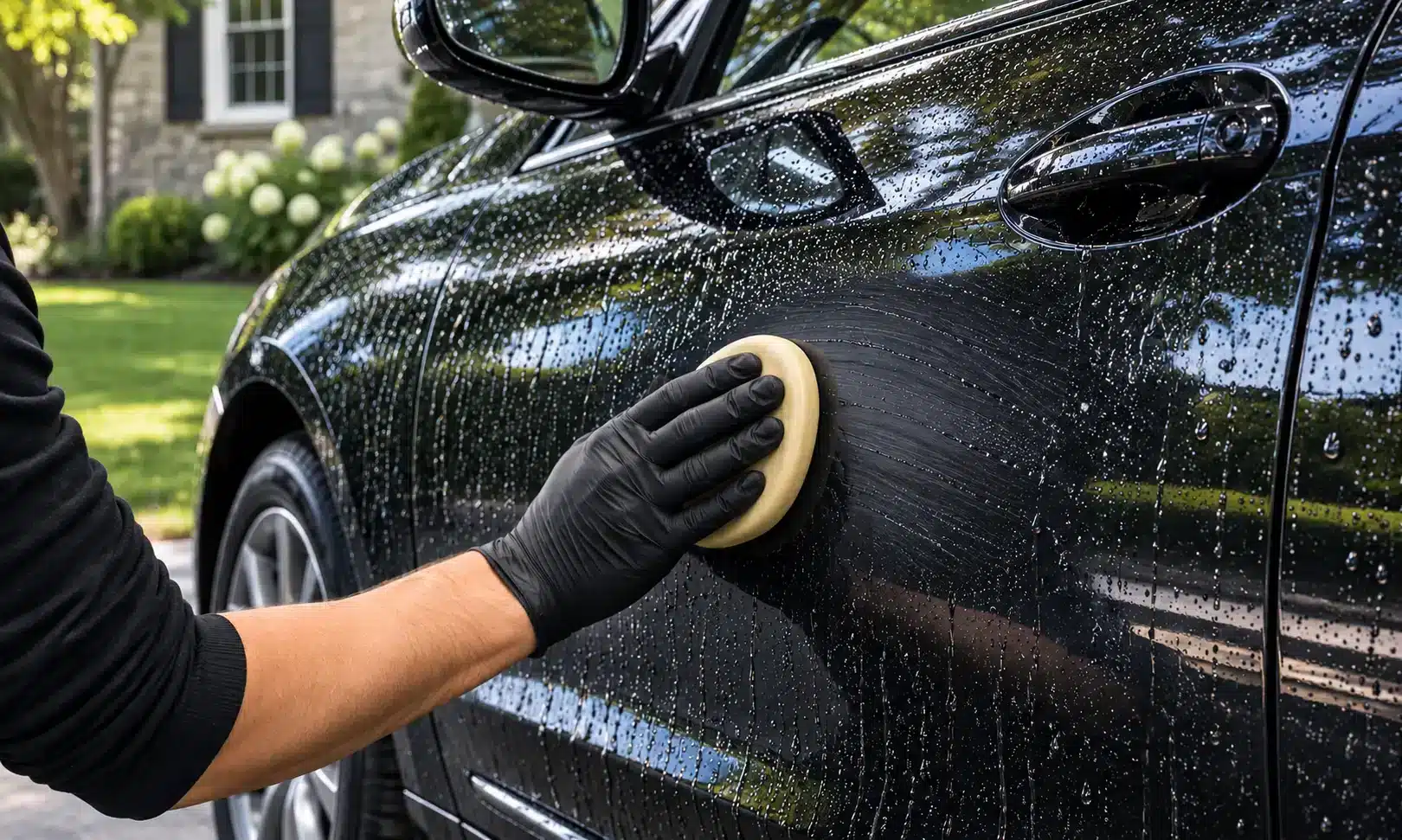
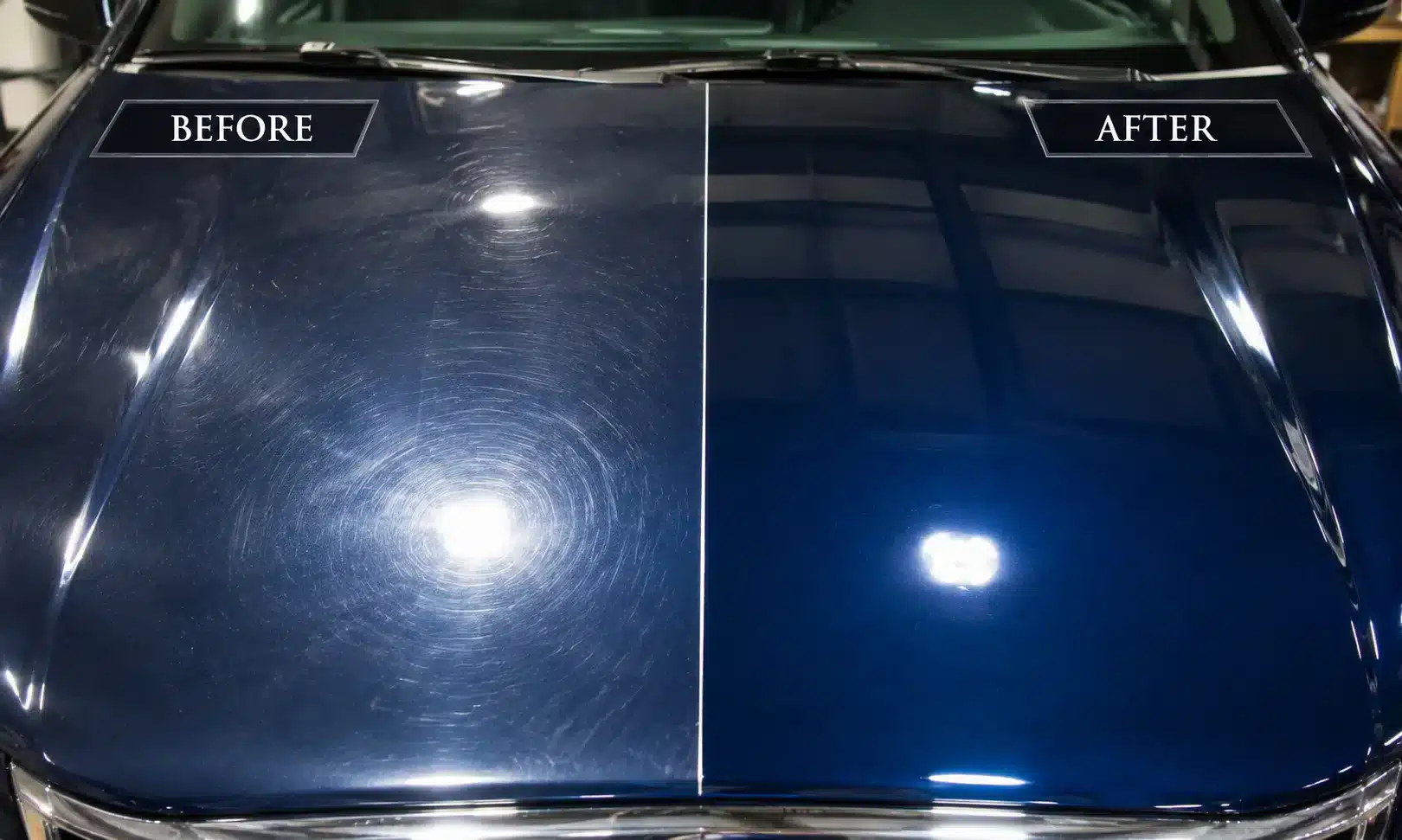
Paint correction is machine polishing that removes a very thin layer of clear coat to level out swirls and light scratches.
This guide explains how it works, the one-step and two-step terms, what clay and iron removal do, and which scratches it can and cannot remove.
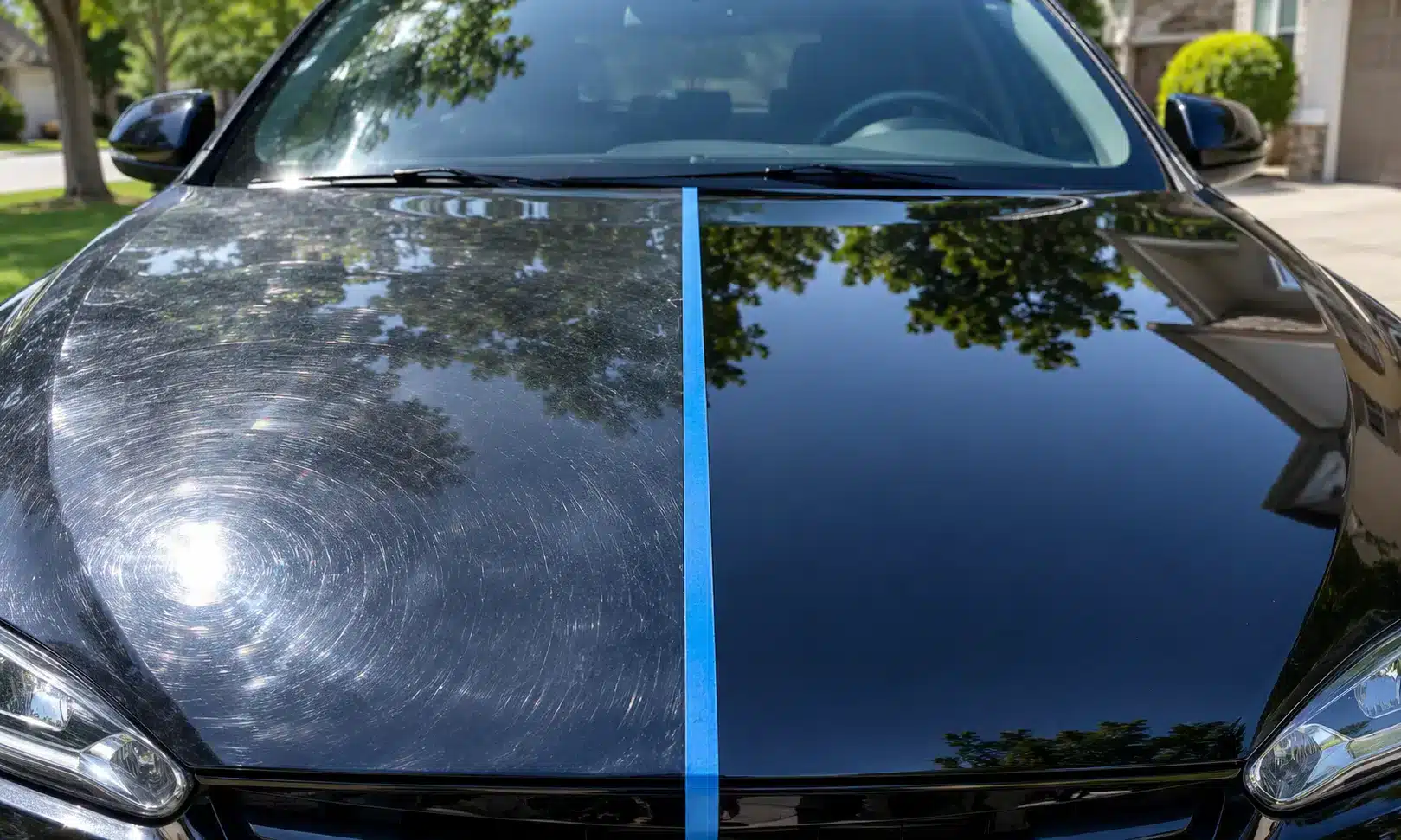
What Is Paint Correction?
Paint correction is the mechanical removal of surface imperfections from a vehicle's clear coat, the clear layer on top of the colour. WestSide Pro, a detailer, describes it as levelling the clear coat so that light reflects evenly and the marks stop showing.
Ceramic Pro, a coating maker, says a detailer uses an electric polisher, a microfiber pad and a cutting compound, and that friction cuts into the clear coat until the scratches are levelled or removed. Naming these businesses is not an endorsement.
What Does Paint Correction Fix?
Ceramic Pro lists fine scratches, spider webbing and swirl marks, bird dropping and bug stains, water spots, and high or low spots left by a poor home coating. WestSide Pro adds oxidation, etching, haze and buffer trails.
All of these sit in or on the clear coat, which is why a polisher can reach them.
What Does the Process Look Like?
A paint correction follows a set order, and WestSide Pro lists the steps below. Each step prepares the paint for the next, which is why a rushed job gives a poor result.
The detailer tests a setup on a small area first, so that only as much clear coat is removed as the defect needs.
Why Do Swirl Marks Appear?
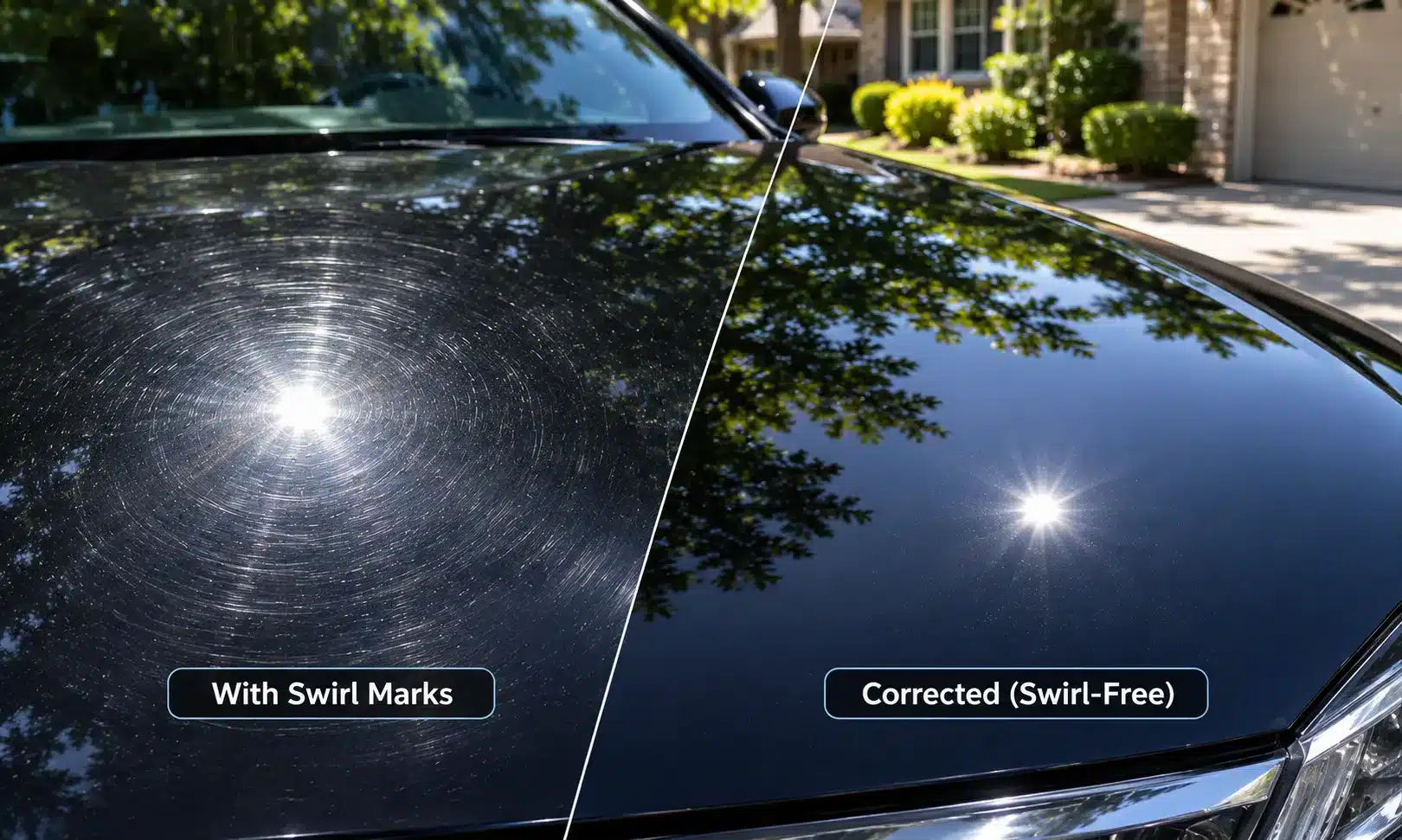
Swirl marks are fine, circular scratches in the clear coat, and everyday washing and drying cause most of them. They show most in direct sun, on dark paint. Dawson Auto Detailing notes that mild washing scratches cannot be fully avoided over time, though a careful wash greatly reduces them.
What Is the Difference Between Paint Correction and Polishing?
Paint correction vs polishing comes down to this: paint correction removes defects, and polishing enhances the gloss of the paint as it is. WestSide Pro says correction is permanent until new damage occurs, while polishing only softens or temporarily hides defects.
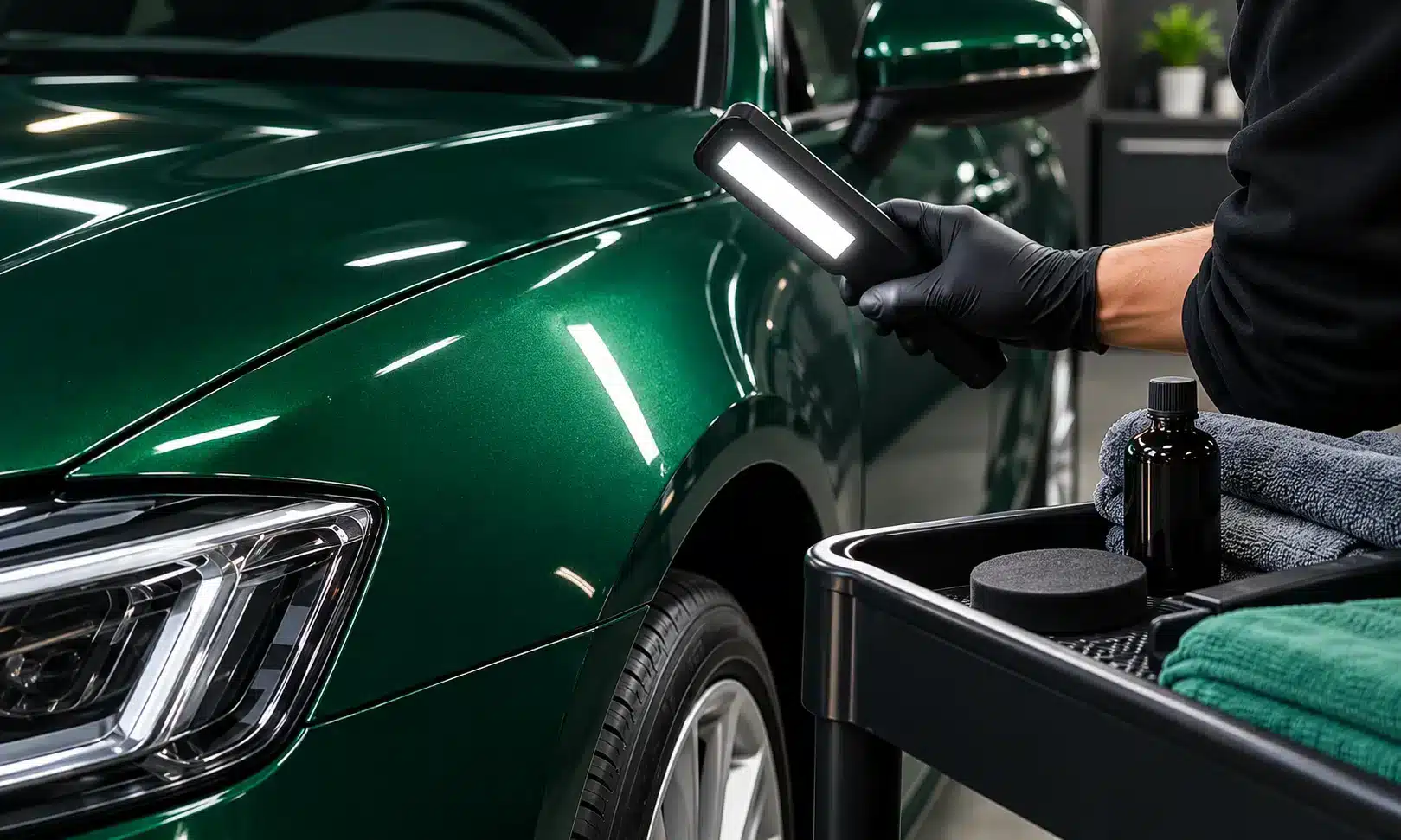
What Do One-Step and Two-Step Paint Correction Mean?
One-step and two-step are the trade's terms for how many polishing passes a car gets, and they describe a method and not a promise. Ceramic Pro calls them stages.
In plain terms, a 1 step paint correction is a single polishing pass for light marks, and a 2 step paint correction adds a second, finer pass for moderate marks. A polish that only boosts gloss, sometimes called an enhancement polish, is lighter still.
The right choice depends on the paint and the defects, and a detailer decides it after an inspection. EvaFresh Auto Spa does not promise a number of steps in advance, and its paint correction is quoted after inspection.
Does a Polish Fill a Scratch or Remove It?
Some polishes fill a scratch and others remove clear coat until the scratch is gone, according to Ceramic Pro. A filled scratch can come back, and a levelled one does not, so ask which kind of work you are paying for.
What Is Dual Action Polishing?
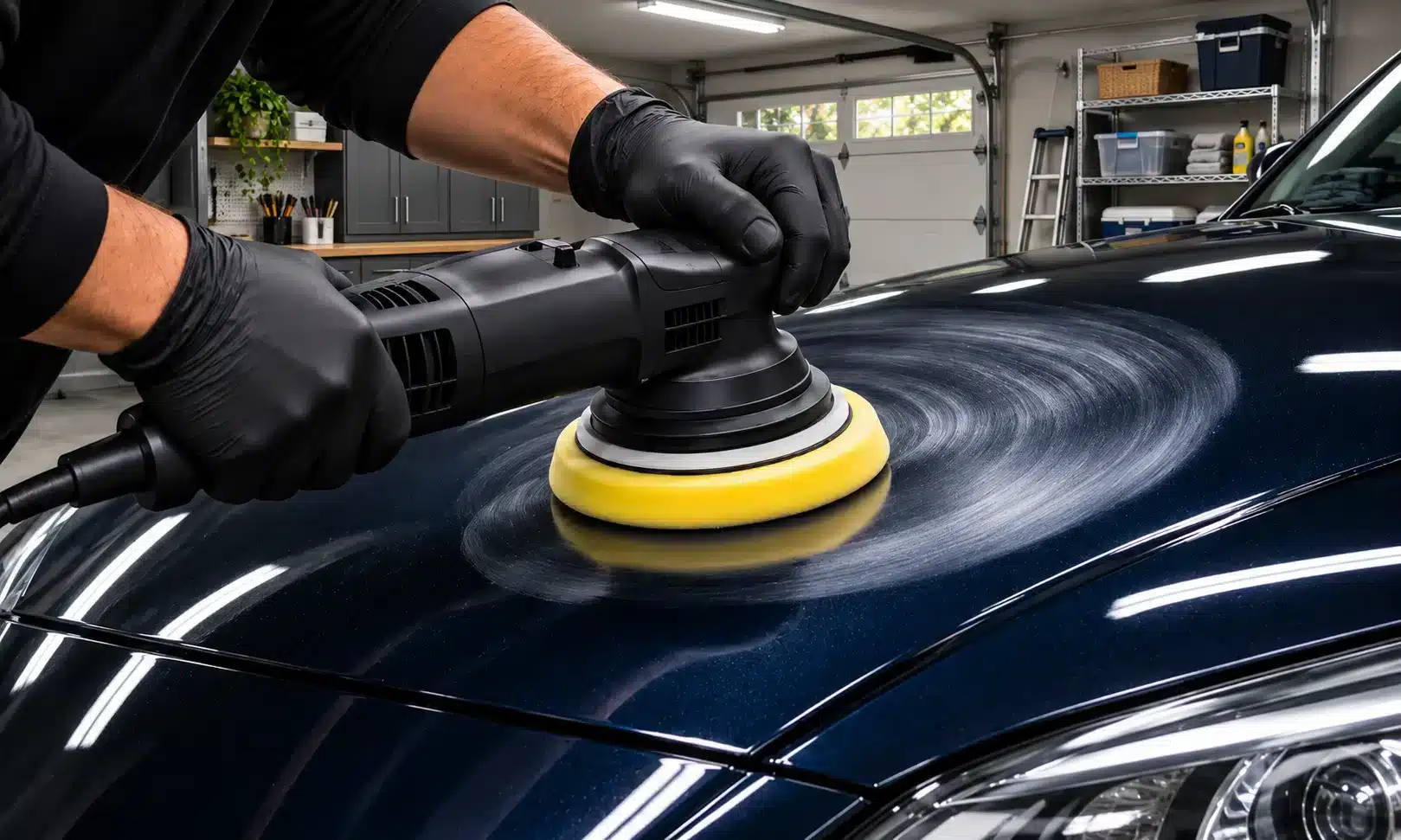
Dual action polishing is machine polishing with a tool that spins and orbits at the same time. 3D Car Care, a maker of car-care products, says this random pattern reduces the risk of swirl marks and paint damage, and that dual action polishers are easier to use than rotary polishers.
The trade-off is cutting power. A free-spinning dual action polisher may struggle with severe defects, while a gear-driven one cuts more but needs more skill.
What Do Clay Bar and Decontamination Do?
Clay bar treatment and decontamination remove what is stuck to the paint before it is polished, so that nothing is dragged across the clear coat. WestSide Pro says contaminants left behind would scratch the paint during polishing.
The order matters: wash first, then decontaminate chemically, then use clay, and only then polish. Skipping a step leaves particles on the paint that the polisher can grind into the clear coat.
What Is Clay Bar Treatment?
Clay bar treatment uses a lubricated clay to pull embedded particles out of the paint. The surface feels smooth afterwards, which is why it is done before polishing and before any coating.
What Is Chemical Decontamination?
Chemical decontamination dissolves iron fallout and tar from the paint with a product made for it. It works without rubbing, which is why it comes before the clay.
What Is Iron Decontamination?
Iron decontamination targets the tiny metal particles that bond to the surface of the paint, such as brake dust. It is one kind of chemical decontamination.
Clay Bar vs Iron Remover: Which Does What?
A chemical or iron remover dissolves bonded metal and tar, and clay then lifts what remains. They are used together, in that order, and neither one removes a scratch.
Which Scratches Can Paint Correction Remove?
Paint correction can remove swirl marks and light to moderate scratches in the clear coat, and it cannot remove a scratch that has gone through it. Ceramic Pro lists fine scratches, spider webbing, bird droppings and bug stains and water spots among the things it can fix.
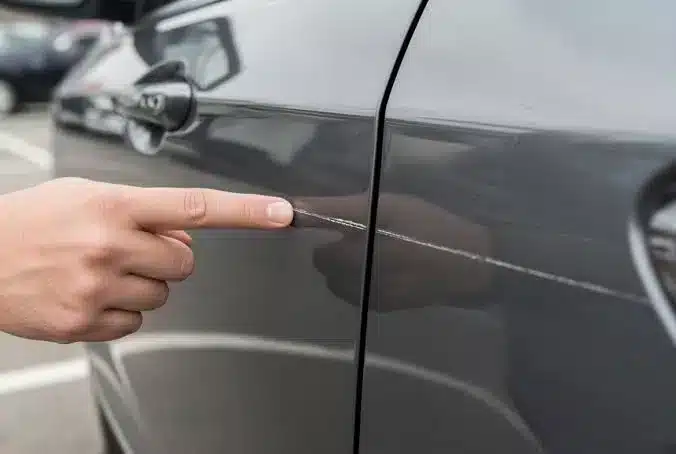
Can detailing remove scratches? Yes, when the scratch is in the clear coat, and no when it is deeper than that. Scratches through the clear coat need touch-up paint or a respray instead of correction.
What Is the Fingernail Test?
The fingernail test is a simple check you can do yourself: run a fingernail across the scratch. WestSide Pro says that if the nail catches, the scratch is likely too deep for correction, and it needs touch-up paint or a respray.
What Can Paint Correction Not Remove?
Paint correction cannot remove dents, stone chips or a deep scratch, and Ceramic Pro advises that a deep scratch be assessed by a professional detailer or a body shop first. It also cannot hide a defect under a coating, because a hardened coating makes existing swirls more visible.
Extremely deep scratches and gouges need a body shop, according to Dawson Auto Detailing, and the same goes for dents and stone chips. A detailer who tells you so is giving you honest advice.
Rushing the work can also do harm: Ceramic Pro warns that cutting too deep can damage the clear coat past repair.
Is Paint Correction Worth It?
Paint correction is worth it when the paint has visible swirls or light scratches that bother you, and it is not worth it when the damage is deeper than the clear coat or the paint is already in good order.
It is also worth considering before a ceramic coating, because a coating seals in the paint as it is. Ceramic Pro says a hardened coating is transparent and makes existing swirls and scratches more visible.
Correction removes clear coat, and the clear coat is thin, so it is not something to repeat often. A detailer who inspects first can tell you how much can safely be removed, and whether a lighter polish is enough.
If you are unsure, ask for an inspection before you ask for a price. The inspection shows what the paint can take.
What Should You Do Before and After Paint Correction?
Before correction, point out the marks that bother you, and after it, protect the paint so the work lasts. Park the car where the detailer can work indoors, since paint correction at EvaFresh Auto Spa is done indoors only. A ceramic coating is one option, and the ceramic coating guide explains it.
Dawson Auto Detailing advises washing in straight lines from the top down to prevent new swirls. A gentle routine matters as much as the correction itself, because a corrected panel can be marked again by a careless wash.
Next Steps After This Guide
If the marks in your paint bother you, the next step is to have the paint inspected, because only an inspection shows what correction can do. Paint correction in Vaughan is quoted after the vehicle is inspected, and the work is done indoors.
All of the guides are on the car detailing guides page.
Jay, the owner of EvaFresh Auto Spa, who has 5+ years in mobile detailing, writes this guide from the work the business does.
Questions About Paint Correction
What is the difference between paint correction and polishing?
At EvaFresh Auto Spa, paint correction removes imperfections from the clear coat, and polishing only enhances gloss and softens defects.
What is dual action polishing?
EvaFresh Auto Spa explains that dual action polishing uses a tool that spins and orbits at once, which lowers the risk of burning the paint.
What is iron decontamination?
EvaFresh Auto Spa explains iron decontamination as dissolving tiny metal particles, such as brake dust, that bond to the paint.
How long does paint correction take?
The time depends on the vehicle, the paint and the number of passes, so EvaFresh Auto Spa gives no fixed time and quotes the work after an inspection.
Does paint correction last?
Paint correction at EvaFresh Auto Spa removes the defects themselves, so the result lasts until new damage occurs, and a careful wash keeps new swirls away.
Can paint correction remove every scratch?
No, EvaFresh Auto Spa cannot remove every scratch: one that has gone through the clear coat stays, and the fingernail test shows which kind you have.
Read the Related Service
If your paint needs correction, see how a quote works, or compare the packages.